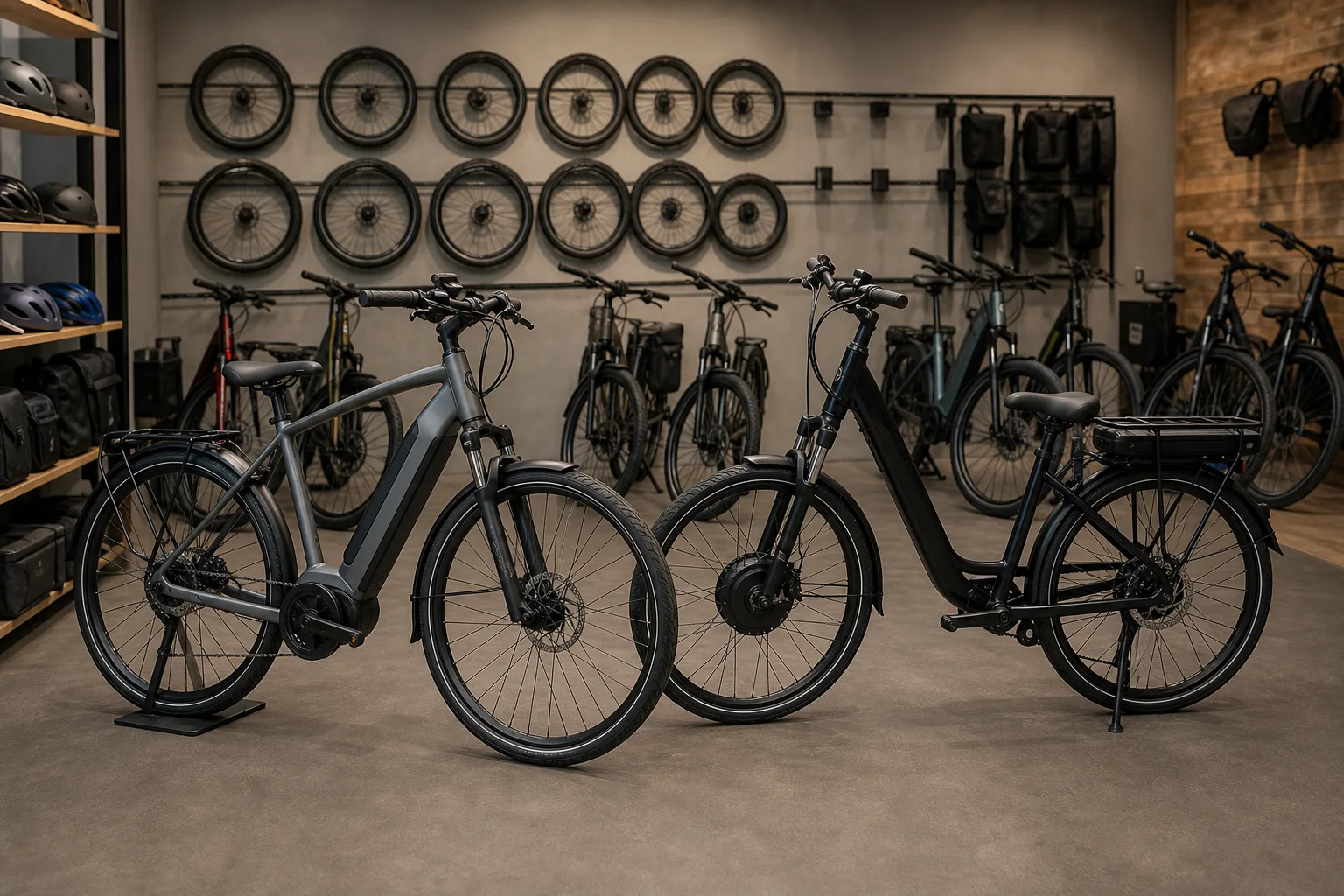
The motor is the part of an electric bicycle that shop staff want to talk about, partly because it is the easiest thing to name and partly because the price gap between the two common layouts is large enough to matter. A rear hub motor sits inside the back wheel and pushes the wheel directly. A mid-drive sits at the bottom bracket, between the cranks, and puts its power through the chain and the rear sprockets, which means it borrows your gears. That single structural difference explains almost everything that follows, including the parts of each argument the sales pitch tends to leave out.
What each layout is actually doing under you
A hub motor works at one fixed ratio to the road. It spins with the wheel, so it makes its best power at a particular road speed and thins out above and below that band, and no amount of shifting changes what it is doing. A mid-drive is geared by whatever sprocket you are in, so dropping into a low gear multiplies its torque at the wheel exactly as it multiplies yours. Careful readers should hold on to that, because it is the whole hill argument in one sentence, and it also predicts where the mid-drive's costs show up later.
The hill, and the honest version of it
On a grade that forces you into the bottom third of the cassette, a mid-drive keeps working while a geared hub motor is slowly losing its advantage, because the hub is turning slowly and heating up while the mid-drive is still spinning happily behind a low gear. That is real, and on a route with a sustained climb, a loaded cargo bike, or a rider who does not want to sweat, it is the reason to pay more. On rolling ground and short pitches, a good hub motor with enough torque gets up perfectly well, and the difference is comfort rather than capability. The trade is that the mid-drive puts every bit of that assistance through your drivetrain.
Stop-start traffic, and what the sensor decides
Traffic is where sensing matters more than motor position. A cadence sensor only knows whether the cranks are turning, so it tends to arrive a beat late and then arrive all at once, which is fine on an open path and less pleasant when you are pulling away between a bus and a parked car. A torque sensor measures how hard you are actually pressing and scales assistance to it, so the bike leaves the line in proportion to your effort and backs off the instant you stop pushing. Mid-drives almost always use torque sensing; hub motors come both ways, and the good ones are torque sensed. Ask which, and then ride away from a stop sign twice to feel it.
Service, wear and the parts you will replace
A mid-drive wears chains and sprockets faster, because the motor's torque is added to yours upstream of them, and riders who shift under full power wear them faster still. Budget for chains more often than you would on an unassisted bike, and expect a cassette and a chainring eventually. Against that, the wheels are ordinary: you can fix a flat, replace a rim, or true a spoke without touching anything electrical. A hub motor reverses both halves. The drivetrain lives a normal life, and the rear wheel does not, so a rear puncture means dealing with a motor cable and a heavier wheel, and a failed hub is usually a whole-wheel replacement. The Consumer Product Safety Commission oversees bicycle and e-bike product safety in the United States, and any shop worth using will talk plainly about which parts on their bikes are serviceable and which are sealed units.
Matching the drive to the route you actually ride
Ride your real commute, not the shop's block. If it is flat or gently rolling, mostly paved, and your loads are groceries rather than a second child, a torque-sensed rear hub does the job for less money and less scheduled maintenance, and it is quieter into the bargain. If you have a climb that makes you think about it in advance, or you carry weight, a mid-drive earns the premium and keeps earning it in summer heat. Check the sensor type, check whether the shop stocks that motor's spares, and check what a replacement wheel or a chainring costs before you sign.
Take both up the steepest thing within a mile of the shop, in the gear you would really use, and pay attention to what the bike does when you stop pedaling halfway up and start again.